
Order & Support:

CATEGORY

Order & Support:
01799797969

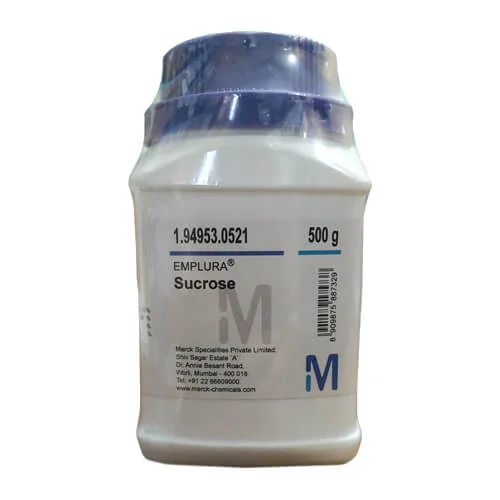
Sucrose 500 gm Merck, India

650৳ 

Sucrose 500 gm is a type of disaccharide (a carbohydrate composed of two simple sugars) that is commonly known as table sugar. It is composed of two monosaccharides: glucose and fructose, which are chemically bonded. Sucrose is naturally found in many plants, particularly in sugar cane and sugar beet, from which it is commercially extracted. Sucrose, 500gm Merck India, Lab Grade Chemical Powder for Education and Analysis

Chemical Structure of Sucrose

Sucrose has the chemical formula C₁₂H₂₂O₁₁. Its structure consists of:
  • glucose molecule (C₆H₁₂O₆), is an aldohexose (a six-carbon sugar with an aldehyde group).
  • fructose molecule (C₆H₁₂O₆), which is a ketohexose (a six-carbon sugar with a ketone group).
These two monosaccharides are linked together through a glycosidic bond between the glucose’s carbon-1 and the fructose’s carbon-2.

Sources of Sucrose

Sucrose is primarily obtained from:
  • Sugar Cane: The most common source of commercial sucrose.
  • Sugar Beet: Another important source, especially in cooler climates.
  • Fruits and Vegetables: Many fruits (such as applespearsgrapes) and vegetables contain natural sucrose, though in lower concentrations compared to sugar cane and beets.

Production and Extraction

Sucrose is extracted by:
  1. Crushing: The sugar cane or sugar beet is crushed to release its juice.
  2. Purification: The juice is purified, often through the use of lime or other chemicals to remove impurities.
  3. Evaporation and Crystallization: The juice is then heated to evaporate the water, leaving behind crystallized sucrose, which is then further refined to produce table sugar.

Sucrose in the Body

When sucrose is consumed, it is broken down in the digestive system into its two monosaccharide components:
  • Glucose: Absorbed into the bloodstream and used for energy by cells throughout the body.
  • Fructose: Metabolized primarily in the liver where it can be converted into glucose or stored as fat.

Role in Metabolism

Sucrose, like other sugars, is a source of energy for the body. When broken down, it provides glucose, which is a primary fuel for cells, especially in the brain and muscles. Excess sucrose intake, however, can lead to weight gain and other metabolic issues, particularly when consumed in large quantities as part of processed foods and beverages.

Uses of Sucrose

  1. Sweetener: Sucrose is widely used as a sweetener in foods and beverages, such as candies, cakes, sodas, and jams.
  2. Preservative: Due to its ability to absorb moisture, sucrose helps preserve foods like jams and jellies by creating a high sugar concentration that inhibits microbial growth.
  3. Fermentation: In brewing and baking, sucrose is often fermented by yeasts to produce alcohol and carbon dioxide.
  4. Industrial Uses: Sucrose is used in the manufacture of a variety of products, from pharmaceuticals to cosmetics and even biofuels.

Health Implications of Sucrose Consumption

  1. Nutritional Value: Sucrose is a caloric sweetener, providing 4 calories per gram. However, it has no essential nutrients (vitamins or minerals), so it is considered “empty calories” when consumed in excess.
  2. Excessive Consumption and Health Risks:
    • Obesity: Excessive sucrose intake contributes to weight gain, especially when consumed in sugary drinks and processed foods.
    • Type 2 Diabetes: A high intake of sucrose (and other refined sugars) can lead to insulin resistance and an increased risk of developing type 2 diabetes.
    • Dental Health: Sucrose is a major contributor to tooth decay as it is fermented by bacteria in the mouth, producing acids that erode tooth enamel.
    • Cardiovascular Disease: High sugar intake has been linked to increased risk factors for heart disease, such as elevated blood pressure, triglycerides, and inflammation.
  3. Recommended Intake: The World Health Organization (WHO) recommends that added sugars (including sucrose) should make up less than 10% of total daily caloric intake, with a further reduction to below 5% for additional health benefits.

Sucrose vs. Other Sugars

  1. Glucose: Unlike sucrose, glucose is a simple sugar (monosaccharide) and is absorbed directly into the bloodstream. It has a higher glycemic index than sucrose, meaning it causes a faster increase in blood sugar levels.
  2. Fructose: Fructose, often found in high amounts in high-fructose corn syrup (HFCS), is metabolized primarily in the liver. While it has a lower glycemic index than glucose, excessive consumption of fructose is associated with fatty liver disease and insulin resistance.
  3. Sucrose vs. Artificial Sweeteners: Sucrose is a natural sugar, whereas artificial sweeteners like aspartamestevia, and sucralose are synthetic and often used as calorie-free sugar substitutes. While they do not contribute calories, there is ongoing debate about their long-term health effects.

Sucrose in the Environment

  • Agricultural Impact: The cultivation of sugar cane and beets for sucrose production can have environmental impacts, including deforestation (in the case of sugar cane) and high water consumption. Sustainable farming practices are important in mitigating these impacts.
Sucrose is a widely consumed disaccharide sugar that serves as a major source of energy. While it is naturally present in many plants, it is commonly refined for use as table sugar. In moderation, sucrose can be part of a healthy diet, but excessive consumption can lead to a range of health issues, particularly metabolic and dental problems. Understanding sucrose’s role in nutrition and metabolism is crucial for making informed dietary choices.

About Labzo Bangladesh

Labzo Bangladesh is a trusted seller, supplier, and stockist of high-quality Chinese-branded and non-branded laboratory equipment, scientific instruments, chemicals, reagents, microscopes, telescopes, medical devices, and more across Bangladesh.

We are committed to providing genuine products through both our online platform and direct sales, ensuring reliability, authenticity, and consistent quality for laboratories, educational institutions, research centers, and industrial users.

With a focus on affordable pricing, nationwide delivery, and professional after-sales support, Labzo Bangladesh is your go-to partner for all scientific and laboratory needs.

Our social media link: https://www.facebook.com/labzobangladesh

Delivery within 1-3 working days in Dhaka City and 3-5 working days anywhere in Bangladesh.

Labzo Bangladesh Website Disclaimer & Product Notice

Welcome to Labzo Bangladesh! Please read carefully before browsing or placing orders:

  1. Product Display & Variation

This website serves as a digital catalog or brochure to represent our company online.

Product images may slightly differ from physical products due to lighting, photography, or your device display settings.

To maintain product quality and prevent counterfeiting, actual products may vary from images shown.

  1. Pricing & Availability

Prices displayed are subject to market fluctuations and do not include VAT or AIT.

Products shown are not ready-stock items, but we can deliver within:

1–3 days in Dhaka City

3–5 days across Bangladesh

Liquid products cannot be delivered outside Dhaka City. Please do not place orders for liquid items from outside Dhaka.

  1. Special Caution

None of our chemicals or reagents are suitable for human consumption or food use.

These products are strictly for research, laboratory, and analytical purposes only.

  1. Office Pickup Notice

For direct pickup from our office, please inform us at least 3 hours in advance by phone.

Without prior notice, immediate pickup may not be possible.

  1. Copyright & Fair Use

This website may use some copyrighted materials under the “Fair Use” policy for purposes such as comment, news reporting, teaching, scholarship, research, and analysis.

Use for non-profit, educational, training, experimental, or personal purposes is considered fair use.

If you believe any content, image, video, or text infringes your copyright, please email us at kaziabdullah084@gmail.com.

All such content will be promptly removed.

Related Products

Magnesium Sulfate 500gm Lab Grade India
In Stock

750৳ 

di-Potassium Hydrogen Phosphate 500gm Merck India
In Stock

1,050৳ 

Sodium Perborate Tetrahydrate 1Kg Merck, Germany
In Stock

1,250৳ 

Bile Salt for Bacteriology 100gm Loba, India
In Stock

3,800৳ 

Sodium Hydrogen Carbonate 1Kg Merck, Germany
In Stock

1,250৳ 

Potassium iodide 100gm Lab Grade
In Stock

3,000৳ 

Bacteriological Peptone, 500gm Hi-Media
In Stock

7,500৳ 

Dimethyl Glyoxime 100gm Extra Pure Loba, India
In Stock

1,800৳ 

L-Histidine Monohydrochloride Monohydrate, 100gm
In Stock

3,500৳ 

Sodium Chloride 1Kg Merck, Germany
In Stock

1,200৳